Leather on Willow, Smoke on the Air: A Cricket-Saturday Tipi Weekend for Two
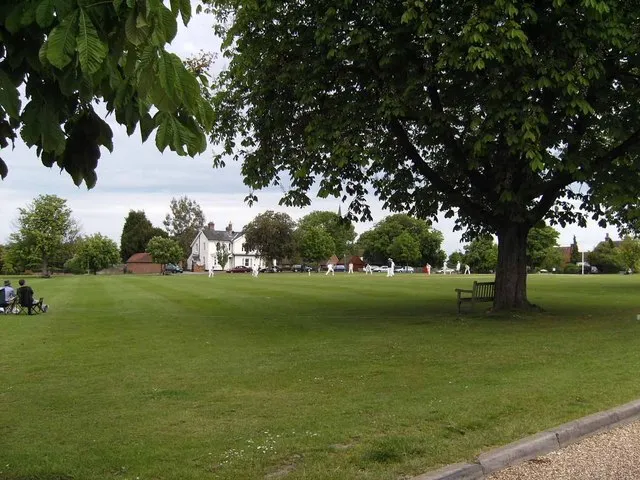
Photo: Barry Shimmon, CC BY-SA 2.0, via Wikimedia Commons
There are two kinds of summer Saturdays. One is a blur of motorway services, timed tickets and someone else’s itinerary. The other is slower: a deckchair, a boundary rope, the dry crack of leather on willow, and absolutely nowhere else to be. A tipi break built around village cricket belongs firmly in the second category. The match is not an add-on to the weekend. It is the reason you chose that field, that village, that particular patch of green.
Choose the fixture before the field
Village cricket is gloriously unstandardised. Fixture lists appear on parish noticeboards, in pub windows and on club websites with varying degrees of digital confidence. Start there. Look for a Saturday friendly or league match where the ground sits close to the village green, ideally within walking distance of a pub that does a decent lunch and a shop that sells cake.
Ask your tipi site whether they have match-day weekends and how other guests have found them. A good host will know the local club, the parking situation and whether the boundary is a five-minute amble or a yomp across three fields. Away fixtures are no good here. You want the game on the green, not a car journey to a sports ground on the edge of town.
Timing matters, too. Late June and July usually offer the most reliable weather, but a fixture in early September has a lovely end-of-season feel: dew on the outfield, jumpers coming out, the smell of cut grass cooling in the evening. Whenever you go, build in a spare hour before the first over. Village cricket rewards the unhurried.
The pitch within a boundary stroll
On-the-Green is more than a name for a tipi site. It is a promise about proximity. Ask for a pitch with a footpath to the village and a route that does not require crossing a busy road or climbing a stile in your good shoes. You want to hear the applause from canvas, even if it is only a smattering when the opposition loses a wicket.
A site that backs onto the green is ideal, but not essential. What matters is the stroll: ten or fifteen minutes at an amble, with a blanket under one arm and a flask in the other. If the tipi sits on a working farm, check the route to the green and whether the footpath is stile-free. If it is not, pack the kind of shoes that do not mind mud. This is a summer weekend, not a fashion shoot.
It is also worth checking noise and privacy. A village match is a sociable thing, but you still want your own quiet corner to come back to. Ask whether the tipi field is separate from the main house, whether other guests will be around, and whether the firepit is yours alone. The romance of the weekend depends on the contrast: a lively afternoon on the boundary, then a firelit patch of silence.
Pack for the boundary, not for a festival
You do not need much. A blanket that can handle grass, a flask of tea or something colder, two enamel mugs and a little cash for the tea urn fund and the cake stall. Scones are non-negotiable. Buy them from a village bakery on the way, or pack a box from home with butter and jam in a small cool bag. A couple of folding chairs are nice if the ground is damp; a waterproof picnic mat is nicer.
Bring a light layer for when the cloud arrives, sun cream for when it does not, and a hat that will not blow across the boundary. A small cloth for wiping mugs is the kind of thing you will be glad of. Leave the sound system at home. Village cricket has its own soundtrack: bat on ball, a dog barking, the low murmur of someone explaining the lbw rule to a newcomer.
If you are bringing a dog, check the club’s rules first. Many village grounds welcome well-behaved dogs on a lead, but not all do. And if you are planning to propose at deep mid-wicket, perhaps keep the ring in a pocket with a zip.
The day, from first over to last light
Arrive by late morning. Set up the tipi, make the bed, fill the flask, then wander over to the green before the players have finished warming up. Find a spot near the boundary but not on it. Sit where you can see the bowler’s run-up and the pavilion door, because village cricket is as much about the comings and goings as the score.
The cricket itself is slow in the best way. Overs take time. Someone’s uncle fields at fine leg with a pint. A child retrieves the ball from a hedge. The tea interval arrives with a queue for the urn and a table of sandwiches that look like they have been made by someone’s grandmother, because they have. This is the part to lean into. Chat to the scorer. Buy a raffle ticket. Ask the person next to you who is winning, even if you can work it out.
When stumps are drawn, or the light goes, or everyone agrees to call it a draw, stroll back to canvas. The day has done its work. You have spent hours doing very little in a very particular English way, and now the evening can begin.
Firepit after the final over
Light the firepit before you are hungry. Something simple works best: baked potatoes wrapped in foil, sausages, a little foil parcel of onions, marshmallows for later. If you bought scones at the match, warm them through on a flat stone at the edge of the fire and eat them with butter that has gone soft in the evening air.
The conversation will drift back to the game. The catch that wasn’t. The lbw that definitely was. The tea urn fund. The way the light fell across the outfield at seven o’clock. This is the bit a hotel cannot do: smoke in your hair, a blanket around your shoulders, and the knowledge that the village green is still there in the dark, waiting for next Saturday.
A few local rules
Park where you are told, not on the green. Keep dogs on leads around the boundary. Take your rubbish home. Put a few coins in the tea urn fund even if you only drink one cup. Cheer the opposition’s good shots. And book early for summer weekends, because village cricket is having a quiet moment and the good pitches go first.
A tipi break built around a cricket match is not about the cricket, not really. It is about letting a small, slightly eccentric English Saturday become the centrepiece of a romantic weekend. Leather on willow, smoke on the air, and nowhere else to be.