Small Party, Big Feeling: The Quiet Rise of the Two-Person Tipi Celebration
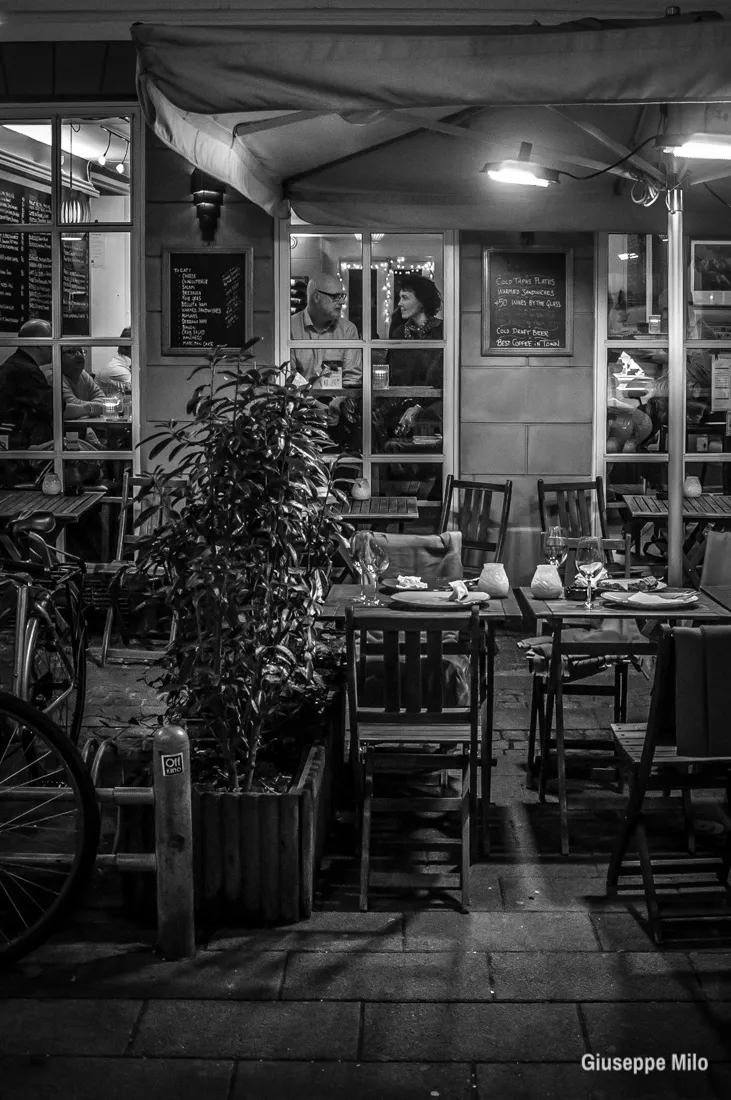
Photo: Giuseppe Milo from Lisbon, Portugal, CC BY 2.0, via Wikimedia Commons
There's a certain type of restaurant anniversary. You know it: a set menu, a table close enough to hear the next couple's conversation, a candle in a jam jar, a bill that arrives before the evening has properly got going. It's fine. It's perfectly nice. And yet more couples are quietly deciding that it isn't quite the thing.
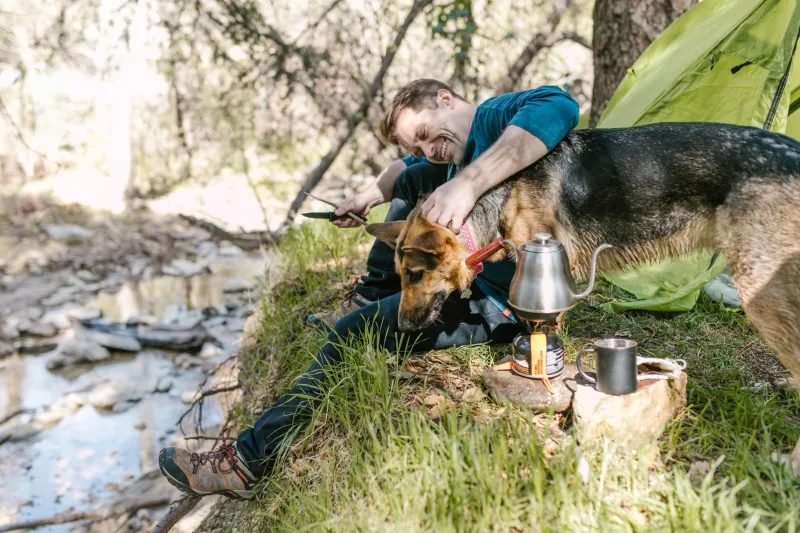
What they're booking instead, increasingly, is canvas. A tipi, a field, a fire, and a guest list you can count on one hand. Sometimes on no hands at all.
Why small has started to feel bigger
The pandemic taught everyone a lesson about scale that we haven't quite unlearned, and honestly, good. When you couldn't gather forty people, you discovered that eight felt lovely. When you couldn't book a restaurant, you discovered that a long table under a sailcloth roof, dodging the weather, felt like something. The habit stuck.
But this isn't only pandemic residue. There's a deeper appeal. Big events are, structurally, a performance. You're hosting. You're moving between tables. You're aware of the seating plan. A micro-celebration removes all of that. There's no room to be a host because everyone present is already yours.
And a tipi is unusually good at this. It's not a marquee — a marquee is a venue that happens to be outdoors. A tipi is a room with the weather happening just above your head, warm at the centre and cool at the edge, quietly dramatic without asking anything of you. You put a rug down, light the firepit, and the space does the work.
The anniversary dinner that isn't in a restaurant
This is the most common version, and the easiest to get right. Book a tipi for two nights. Do nothing formal on the first night — a slow arrival, a walk, whatever you can assemble from a cool box. Then, on the second evening, spend some effort.
A few things that reliably work:
Cook one good thing. Not a tasting menu — a long, slow thing that fills the canvas with smell. A braise, a chilli, something in a cast-iron pot over the firepit. The cooking becomes the entertainment, and you're both in the same place doing it.
Bring the table. Linen, proper glasses, real cutlery, a candle or three. It reads as effort, and effort is the actual gift. A tartan blanket over a bench and a folded napkin do more for atmosphere than any amount of fairy lights.
Have a playlist ready and offline. Signal in a field is a lottery. Download it.
Keep the speeches to a minimum. You know what your other half is like after a second glass. Say the thing you actually mean, once, and leave it there.
Styling-wise, restraint is the thing. A tipi at night with a fire going is already a strong image. Add a long bench, a couple of lanterns, a runner down the table, some foraged foliage — and stop. The mistake people make with canvas is filling it. Empty space is what you're paying for.
Engagements, and the case for not doing it in public
There's a whole genre of proposal that involves a crowded place and a stranger with a camera. It works for some. For others, the thought of an audience during the most exposed moment of your life is genuinely off-putting.
A tipi solves this. You can propose in a field with nobody watching, at whatever hour you like, in whatever clothes you're actually comfortable in. Two chairs by the firepit. Nobody clapping. No waiter appearing at the wrong moment. If it goes well, you sit there for an hour not saying much. If the weather turns, so much the better — you've got somewhere warm to retreat to and a story.
Many tipi sites will happily arrange a simple set-up: a fire laid ready, a bottle on ice, a lantern trail from the gate. It's a small job for them and a large one for you. Ask early — autumn Saturdays go first.
The just-because weekend, which is really the point
Anniversaries and engagements are easy to justify. The interesting shift is in weekends that mark nothing at all. A Tuesday in November. A birthday that ends in a zero and doesn't want a party. The end of a hard few months.
These are, in my view, the best use of a tipi. There's no story to live up to, no photographs to take, no relatives to manage. You have a warm room in a field and forty-eight hours in which nothing is required of you.
That is a strange and rare thing for adults. Most of us can't remember the last time we had nothing to do and nowhere to be simultaneously. A canvas weekend gives you that in a way a hotel can't quite manage, because a hotel always has a lobby and a bar and somewhere you're expected to be seen.
Practical notes for a small party in canvas
A handful of things worth knowing before you book.
- Check what's included. Some sites hire the structure only; others provide the whole set-up with furniture, firewood and lighting. The second is usually better value for a celebration you're planning from a distance.
- Be honest about the guest count. A tipi designed for thirty will swallow a party of six. If you're hosting a handful, ask whether they have a smaller bell tent or a partial set-up. Intimacy needs walls, or at least a smaller footprint.
- Think about sound. A fire is noisy in a good way. Speech carries. If you're bringing a speaker, keep it modest — you're in a field, and fields have neighbours.
- Weather is part of the package. Off-season canvas is genuinely lovely, but you need a coat for the walk to the loos. Nobody has ever regretted a hot water bottle.
- Have a bad-weather fallback that isn't "go home." A deck of cards, a bottle of something, a plan to be indoors and content.
The point of hiring the canvas
You can style a micro-celebration out of almost anything. What a tipi gives you is a room that feels like an occasion without demanding one. It flatters effort and forgives laziness in equal measure. And it does the one thing no restaurant table can: it holds the moment still, with nobody else in it.
For two people, that's usually all you need.