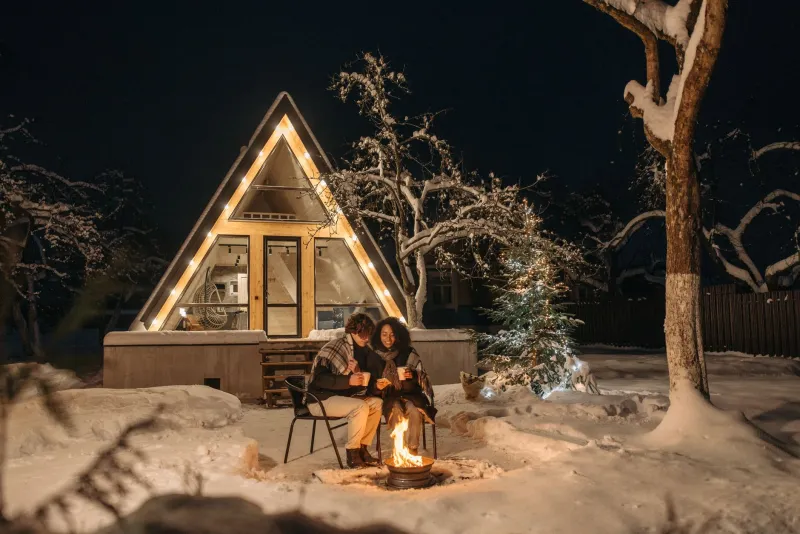
A Thousand Starlings, One Firepit: The Late-Autumn Tipi Break for Two
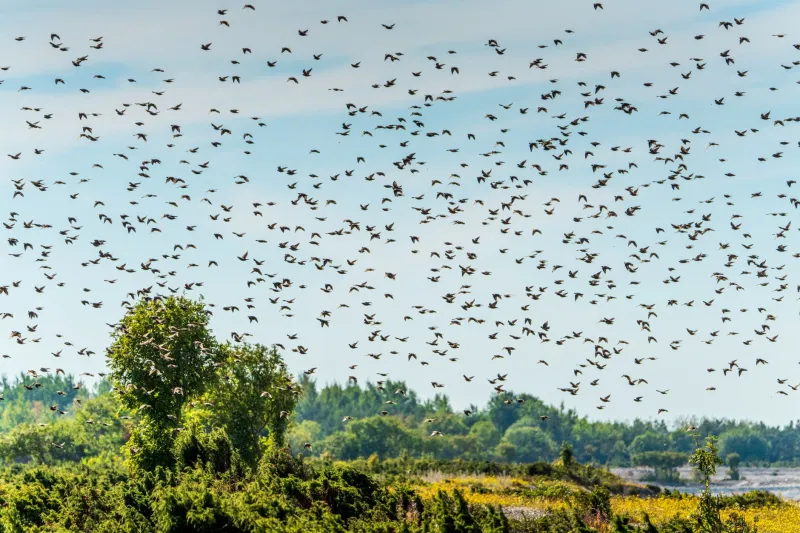
There's a moment, roughly twenty minutes after sunset on a still November evening, when the sky over a British reedbed stops behaving like sky and starts behaving like weather. Thousands of starlings lift, fold, twist and pour back on themselves in one dark, breathing shape. It lasts maybe fifteen minutes. Then the whole flock drops into the reeds, the noise stops, and the field goes quiet enough that you can hear your own coat rustling.
It is, by some distance, one of the best free shows in the country. And a canvas tipi on the edge of a wetland is the ideal place to watch it from.
Why Late Autumn, of All Times
Summer gets all the credit for outdoor romance, but late autumn quietly does it better. The crowds have gone home. The pubs have fires lit. The light is low and gold by half past three, and the evenings are long enough that you actually want to spend them indoors, which is fortunate, because the indoors in question has a wood burner in it.
This is the shoulder season at its most generous. You get the murmuration — that great whirling cloud of starlings — without the pressure of a summer weekend, and you get the deep pleasure of coming back to a warm tipi with cold cheeks and muddy boots. Off-season glamping isn't a compromise. It's the whole point.
Timing the Walk: Dusk Is Everything
Murmurations aren't a scheduled event, but they're not far off. The birds typically gather from about an hour before sunset and drop into their roost shortly after it, so you want to be in position early and settled. Late November sunsets in the UK fall somewhere between four and half four, which means you're walking out at three — a lovely, low-slung sort of light for a stroll across a meadow.
Pick a wetland reserve with a decent viewing point: RSPB Ham Wall on the Somerset Levels, Otmoor in Oxfordshire, Leighton Moss in Lancashire, or any of the quieter reedbeds where the birds roost. Planning your trip around a reserve with well-marked paths is the easy option, and worth it — you don't want to be route-finding in the dark with a torch and a grumbling stomach.
Aim to walk twenty to forty minutes to your vantage point, giving yourself time to stop, breathe, and let your eyes adjust. Bring a red-light torch for the walk back, or at least a phone with a low setting, and check the reserve's closing times before you set out. Small flocks are still spectacular. If the murmuration is modest, lean into it — fewer people, more sky.
Packing for a Clear, Cold Evening
Clear skies are what you want for the birds and what you'll get, along with a temperature that drops like a stone the moment the sun goes. Pack as though it were January, because after dark in November it might as well be.
- Thermal base layers, top and bottom
- A wool hat and gloves you can still use a flask with
- Waterproof boots, plus a spare pair of socks in the bag
- A flask of something hot and sweet
- A small blanket for the walk, or for sitting on
- Binoculars if you have them — nice, not essential
The tipi itself does the rest: a proper duvet, a lantern, and the sort of deep, cold-weather sleep that hotel rooms never quite manage.
The Firepit Finish
Back at the canvas, the evening has a natural shape. Fire first. If your tipi has a firepit, stack it early so it's glowing by the time you're out of your boots; if it has a wood burner, better still. Something slow-cooked is the right answer — a stew left to murmur on the top, or potatoes buried in the embers and dug out with butter and too much salt.
This is the part that makes the whole trip feel like a shared secret. The contrast does the work: cold air on your face, warmth on your knees, the smell of woodsmoke in your coat the next morning. Let the evening be small. A card game. A book. The sound of an owl, maybe, or just the fire settling.
The Romance of the In-Between Season
Midsummer romance is performed outdoors, in linen, with a picnic. November romance is negotiated under a blanket, next to a fire, with the specific pleasure of having been outside together and then come back in. It's the difference between a holiday and a hideaway.
There's also the scale of the thing. A murmuration is a genuinely eerie, genuinely beautiful sight — tens of thousands of birds moving as one, and no one entirely sure why. Standing in a cold field watching it, with someone you like, does something that a restaurant never quite does. You don't need to talk about it much. It's just there, overhead, for a quarter of an hour.
And then it's gone, and you walk back in the dark, and the tipi is warm, and the weekend has done its job.
A Small Practical Note
Murmuration season generally runs from late October into February, with the biggest flocks in December and January. Midweek tipi breaks in November are often quieter and cheaper than you'd expect, and many reserves run dusk walks with volunteers who know the roosts — worth checking locally. Book a two-night stay if you can. One night puts too much pressure on the weather; two gives you a spare dusk in case the sky doesn't play ball.